
Paediatric Respiratory & Cardiac
In this chapterفي هذا الفصل
Key terms (12)المصطلحات الأساسية
Chapter outline (10 sections)مخطط الفصل
- Learning Objectivesأهداف التعلّم
- 11.1 · Why a Child's Airway Is Different١١٫١ · لماذا مجرى الطفل الهوائي مختلف
- 11.2 · Croup and Epiglottitis١١٫٢ · الخانوق والتهاب لسان المزمار
- 11.3 · Bronchiolitis, Asthma and Cystic Fibrosis١١٫٣ · التهاب القصيبات والربو والتليّف الكيسي
- 11.4 · The Rest of the Chest١١٫٤ · بقية الصدر
- 11.5 · Noticing Deterioration Before It Happens١١٫٥ · ملاحظة التدهور قبل حدوثه
- 11.6 · After a Tonsillectomy١١٫٦ · بعد استئصال اللوزتين
- 11.7 · Congenital Heart Disease١١٫٧ · أمراض القلب الخلقية
- 11.8 · Rheumatic Fever, Kawasaki Disease and the Local Setting١١٫٨ · الحمّى الروماتيزمية وداء كاواساكي والسياق المحلّي
- 11.9 · Murmurs, Activity and Going Home١١٫٩ · النفخات والنشاط والعودة للمنزل
Start learningبدء التعلّم Learning objectivesأهداف التعلّم Test yourselfالاختبار الذاتي
Learning Objectivesأهداف التعلّم
11.1 · Why a Child's Airway Is Different١١٫١ · لماذا مجرى الطفل الهوائي مختلف
Almost everything in this chapter follows from a small number of anatomical facts.
وكلّ شيء في هذا الفصل تقريباً ينبع من عدد صغير من الحقائق التشريحية.
Respiratory distress is recognised from across the room, and the signs are cumulative rather than alternative — the more of them present, the sicker he is.
والضائقة التنفّسية تُميَّز من الطرف الآخر من الغرفة والعلامات تراكمية لا بديلة — فكلّما زاد عددها اشتدّ مرضه.
Respiratory failure is what distress becomes when he can no longer compensate — and the danger is that several of its signs look like improvement.
والقصور التنفّسي ما تصير إليه الضائقة حين لا يعود يعوّض — والخطر أن عدداً من علاماته تبدو تحسّناً.
- Fast, noisy, visibly struggling
- Recession, flaring, grunting
- Restless, agitated
- Frightening to watch — but he is compensating
- Rate falling and effort reducing
- Silent chest — no air moving, so no wheeze
- Drowsy, floppy, quiet
- Bradycardia and cyanosis — pre-arrest
That is the trap this chapter turns on: a quiet child is not a settled child. A falling respiratory rate, a chest that has gone silent, and a baby who has stopped fighting are all signs he is close to arrest.
وذلك الفخّ الذي يدور عليه هذا الفصل: أن الطفل الهادئ ليس طفلاً مستقرّاً. فمعدّل تنفّس هابط وصدر صار صامتاً وطفل توقّف عن المقاومة كلّها علامات قربه من التوقّف.
11.2 · Croup and Epiglottitis١١٫٢ · الخانوق والتهاب لسان المزمار
- Viral, common; 6 months–6 years
- Gradual onset over a day or two, worse at night
- Barking, seal-like cough; hoarse voice
- Inspiratory stridor; low-grade fever
- The child looks unwell but not toxic
- Wants to sit up
- Bacterial, rare now; any age
- Sudden onset over hours
- No cough; muffled ‘hot potato’ voice
- Drooling; high fever; toxic-looking
- Tripod position, chin forward, refusing to lie
- A true airway emergency
The discriminators worth carrying: cough present in croup, absent in epiglottitis; drooling in epiglottitis, not in croup; and gradual against sudden.
والفوارق الجديرة بالتذكّر: السعال موجود في الخانوق وغائب في التهاب لسان المزمار؛ وسيلان اللعاب في الثاني لا الأول؛ وتدريجي مقابل مفاجئ.
The golden rule is the single most important instruction in this chapter, and it is absolute.
والقاعدة الذهبية أهمّ تعليمة منفردة في هذا الفصل وهي قطعية.
Croup management has changed, and the outdated version is still widely taught.
وتدبير الخانوق تغيّر والنسخة القديمة ما زالت تُدرَّس على نطاق واسع.
- Humidified air and cool mist
- Repeatedly shown ineffective in trials
- Steamy bathrooms and steam tents
- It persists in teaching, not in evidence
- Oral dexamethasone — a single dose, for every severity including mild
- Nebulised adrenaline for moderate to severe
- — but its effect is temporary, so observe afterwards
- Keep him calm; oxygen if needed
Two closing points. Epiglottitis is now much less common, and the reason connects directly to Chapter 10: routine Hib immunisation. So it is rarer, not gone — and it is commoner in an unimmunised or incompletely immunised child, which is a question worth asking. And after nebulised adrenaline, the child is observed rather than discharged, because the effect wears off before the swelling does.
ونقطتان ختاميتان: الأولى أنّ التهاب لسان المزمار صار أقلّ شيوعاً بكثير والسبب يتّصل مباشرةً بالفصل العاشر: التطعيم الروتيني ضد المستدمية النزلية من النمط ب (Hib). فهو أندر لا زائل — وأشيع في طفل غير مطعَّم أو ناقص التطعيم وذلك سؤال يستحقّ الطرح. والثانية أنّه بعد الأدرينالين المُرذَّذ يُراقَب الطفل ولا يُخرَج، فالأثر يزول قبل أن يزول التورّم.
11.3 · Bronchiolitis, Asthma and Cystic Fibrosis١١٫٣ · التهاب القصيبات والربو والتليّف الكيسي
Bronchiolitis is a lower respiratory infection of infants under about two, usually RSV. It begins as a coryzal illness and worsens over days three to five — so a baby who looks manageable today may not tomorrow, and that is what parents are told.
والتهاب القصيبات عدوى تنفّسية سفلية في رضّع دون نحو السنتين والمسبّب عادةً الفيروس المخلوي التنفّسي. ويبدأ كمرض زكامي ويسوء عبر الأيام ٣ إلى ٥ — فالطفل الذي يبدو محتملاً اليوم قد لا يكون غداً وذلك ما يُقال للوالدين.
- Oxygen to maintain the target saturation
- Feeding support — small frequent, nasogastric or intravenous if he cannot feed
- Nasal suction before feeds — he is an obligate nose breather
- Minimal handling; observation
- Antibiotics — it is viral
- Steroids — no benefit in bronchiolitis
- Bronchodilators — not routinely effective
- Chest physiotherapy
Knowing that treatment is supportive prevents a great deal of unnecessary intervention — and the intervention that does matter is watching the feeding, because a baby who stops feeding is the one who needs admission.
ومعرفة أن العلاج داعم تمنع تدخّلاً كثيراً غير ضروري — والتدخّل المهمّ مراقبة الرضاعة، فالطفل الذي يتوقّف عن الرضاعة هو من يحتاج التنويم.
Asthma in a child presents with wheeze, cough — often worse at night and with exercise — breathlessness and chest tightness, typically variable and with triggers. But the red flag is the one from the first section of this chapter, and it deserves repeating on its own.
والربو في طفل يتظاهر بأزيز وسعال — أسوأ ليلاً ومع الجهد غالباً — وضيق نفس وضيق صدر متغيّران عادةً ومرتبطان بمحفّزات. لكن علامة الإنذار هي التي من القسم الأول وتستحقّ التكرار وحدها.
Cystic fibrosis is an autosomal recessive condition producing abnormally thick secretions that obstruct the airways, the pancreas and the gut.
والتليّف الكيسي حالة وراثية صبغية جسمية متنحّية تُنتج إفرازات سميكة شاذّة تسدّ المجاري الهوائية والبنكرياس والأمعاء.
Management is lifelong and multidisciplinary: airway clearance physiotherapy, pancreatic enzyme replacement with meals, a high-calorie high-protein diet with fat-soluble vitamins, and aggressive treatment of infections. And a specific infection-control point: children with cystic fibrosis are segregated from one another to prevent cross-infection with resistant organisms — which is why they are not put in the same bay or the same clinic waiting room.
والتدبير مدى الحياة ومتعدّد التخصّصات: علاج طبيعي لتصفية المجاري الهوائية وتعويض إنزيمات البنكرياس مع الوجبات وحمية عالية السعرات والبروتين مع فيتامينات ذائبة في الدهن وعلاج حازم للعدوى. ونقطة مكافحة عدوى محدّدة: أن أطفال التليّف الكيسي يُفصَلون عن بعضهم منعاً للعدوى المتصالبة بكائنات مقاومة — ولهذا لا يُوضَعون في الحيّز نفسه ولا غرفة انتظار العيادة نفسها.
11.4 · The Rest of the Chest١١٫٤ · بقية الصدر
The pertussis point is worth its own line, because it is how infants die: a young infant with pertussis may never whoop, and the presentation is apnoea, colour change or a seizure. Protection comes from maternal vaccination in pregnancy and from vaccinating the household — the infant is too young to be protected by his own schedule.
ونقطة السعال الديكي تستحقّ سطراً خاصّاً فهكذا يموت الرضّع: أن الرضيع الصغير المصاب بالسعال الديكي قد لا يشهق أبداً والتظاهر انقطاع نفس أو تغيّر لون أو اختلاج. والحماية من تطعيم الأمّ في الحمل وتطعيم أفراد المنزل — فالرضيع أصغر من أن يحميه جدوله.
Oxygen delivery: the device is chosen by the concentration needed, and the concentration a device delivers depends on the flow and on how much room air the child entrains.
وإيصال الأكسجين: يُختار الجهاز بحسب التركيز اللازم، ويعتمد التركيز الذي يوصله الجهاز على التدفّق وعلى كمية هواء الغرفة التي يسحبها الطفل.
Two practical points. Distress about the mask makes the hypoxia worse, so a lower-concentration device the child tolerates may deliver more oxygen than a high-concentration one he fights. And keep him with his parent — crying costs oxygen.
ونقطتان عمليتان: الأولى أنّ الكرب من القناع يفاقم نقص الأكسجة، فجهاز أقلّ تركيزاً يحتمله الطفل قد يوصل أكسجيناً أكثر من جهاز عالي التركيز يقاومه. والثانية أن يُبقى الطفل مع والده — فالبكاء يكلّف أكسجيناً.
11.5 · Noticing Deterioration Before It Happens١١٫٥ · ملاحظة التدهور قبل حدوثه
Because a child compensates and then collapses, the whole system of paediatric ward safety is built around noticing the change early — which is what a paediatric early warning score exists to do.
ولأن الطفل يعوّض ثم ينهار بُني نظام سلامة أجنحة الأطفال كلّه حول ملاحظة التغيّر مبكّراً — وهو ما توجد لأجله درجة الإنذار المبكّر للأطفال.
Escalating works better when it is structured. Say who you are and where, what the situation is, the relevant background, your assessment, and — the part most often left out — what you want to happen and by when.
والتصعيد ينجح بصورة أفضل حين يكون منظّماً. يُذكر مَن المتّصل وأين، والوضع، والخلفية ذات الصلة، والتقييم، وما المطلوب حدوثه ومتى — وهو الجزء الأكثر إغفالاً.
Finally, the ward around the child. Respiratory infections in children are seasonal and predictable, and they spread on the ward — so cohorting by organism, strict hand hygiene, and correct precautions matter more in winter than any single treatment decision. And note the two specific ones from this chapter: bronchiolitis spreads readily and needs contact precautions, and children with cystic fibrosis are kept apart from one another.
وأخيراً الجناح حول الطفل. فالعدوى التنفّسية في الأطفال موسمية ومتوقّعة وتنتشر في الجناح — فالتجميع بحسب الكائن ونظافة اليدين الصارمة والاحتياطات الصحيحة تهمّ في الشتاء أكثر من أيّ قرار علاجي منفرد. ولتُلاحَظ النقطتان المحدّدتان من هذا الفصل: أن التهاب القصيبات ينتشر بسهولة ويحتاج احتياطات تماسّ وأن أطفال التليّف الكيسي يُبقَون متباعدين.
11.6 · After a Tonsillectomy١١٫٦ · بعد استئصال اللوزتين
Tonsillectomy is one of the commonest operations in childhood, and the nursing responsibility afterwards is dominated by one complication: bleeding. The problem is that a child swallows the blood, so the classic sign of haemorrhage — visible blood — is exactly what you do not see.
واستئصال اللوزتين من أشيع العمليات في الطفولة والمسؤولية التمريضية بعده يهيمن عليها مضاعفة واحدة: النزف. والمشكلة أن الطفل يبتلع الدم فالعلامة الكلاسيكية للنزف — دم مرئي — هي بالضبط ما لا يُرى.
Positioning follows from the same problem.
والوضعية تنبع من المشكلة نفسها.
Two prohibitions. No red or brown fluids — they make fresh blood impossible to distinguish from a drink. And nothing that encourages coughing, straining, gargling or throat clearing, including a straw in some units, since suction on the wound can dislodge the clot.
ومنعان. لا سوائل حمراء أو بنّية — فهي تجعل تمييز الدم الطازج عن الشراب مستحيلاً. ولا شيء يشجّع السعال أو الشدّ أو الغرغرة أو التنحنح بما فيه المصّاصة في بعض الوحدات، فالشفط على الجرح قد يُزيح الخثرة.
11.7 · Congenital Heart Disease١١٫٧ · أمراض القلب الخلقية
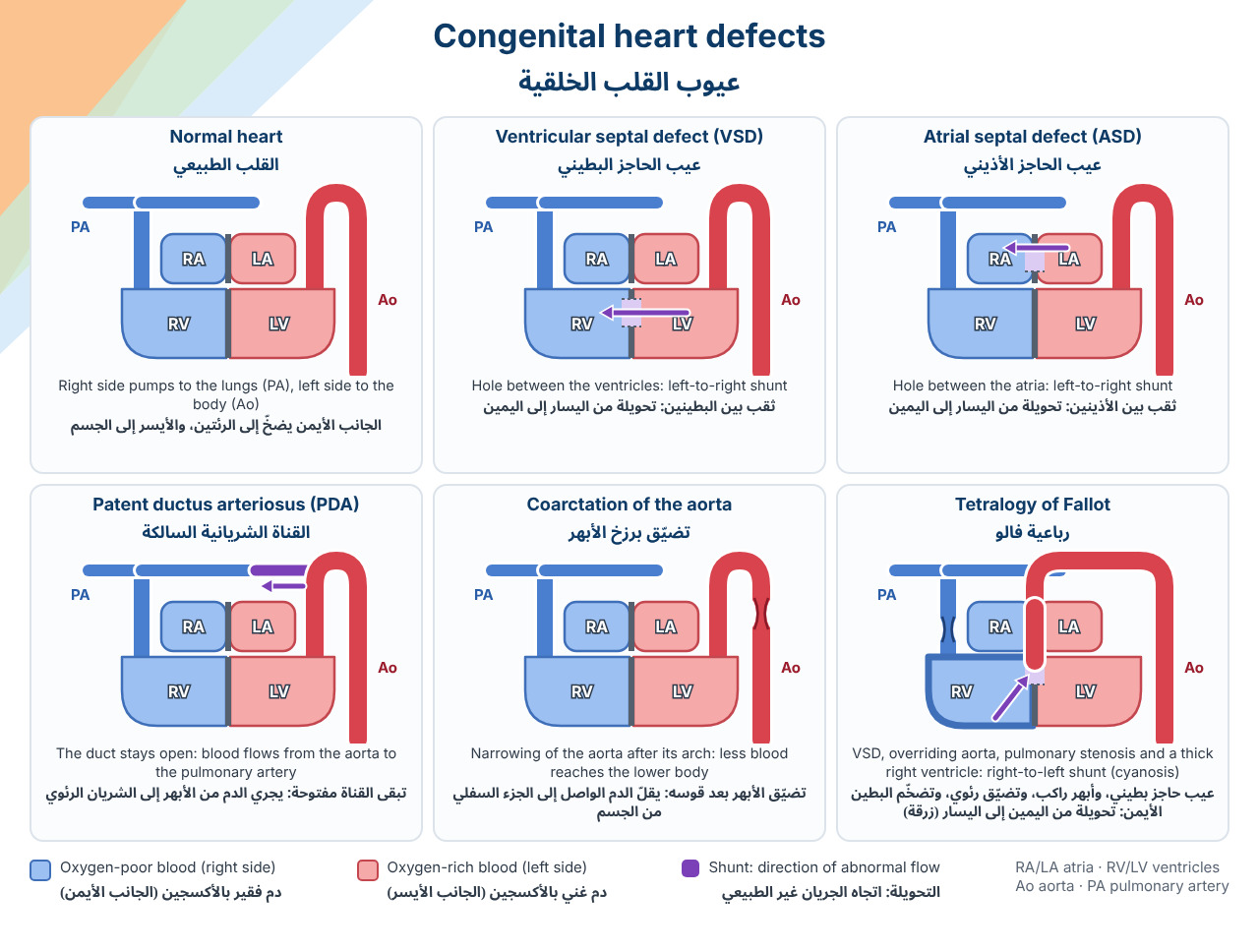
- Oxygenated blood shunts back to the lungs
- VSD, ASD, PDA (shunts); coarctation (obstructive, but also acyanotic)
- Pulmonary overcirculation → heart failure
- Presents with feeding difficulty and poor growth
- Deoxygenated blood reaches the body
- Tetralogy of Fallot, transposition
- Central cyanosis not corrected by oxygen
- Presents with blue episodes and clubbing over time
The distinction that matters at the bedside: cyanosis that does not improve with oxygen suggests a cardiac shunt rather than a lung problem, because the blood is bypassing the lungs rather than failing to be oxygenated in them.
والتمييز المهمّ عند السرير: أن الزُراق الذي لا يتحسّن بالأكسجين يوحي بتحويلة قلبية لا مشكلة رئوية، فالدم يتجاوز الرئتين لا يفشل في الأكسجة فيهما.
A tet spell — a hypercyanotic spell in tetralogy of Fallot — is the emergency to know. A sudden episode of deepening cyanosis, distress and irritability, often triggered by crying, feeding or waking.
ونوبة فالو — نوبة فرط زُراق في رباعية فالو — الحالة الإسعافية الواجب معرفتها. نوبة مفاجئة من تعمّق الزُراق وكرب وتهيّج يُحدثها البكاء أو الرضاعة أو الاستيقاظ غالباً.
An older child often discovers squatting for himself — it is the same manoeuvre, and it is a sign rather than a habit.
والطفل الأكبر غالباً يكتشف القرفصاء بنفسه — وهي المناورة نفسها وهي علامة لا عادة.
Heart failure in an infant does not look like heart failure in an adult, and the place it shows first is feeding.
وقصور القلب في رضيع لا يبدو كقصور القلب في بالغ وأول مكان يظهر فيه الرضاعة.
The feeding management follows directly from the mechanism, and it is largely nursing rather than medical.
وتدبير الرضاعة ينبع مباشرةً من الآلية وهو تمريضي إلى حدّ بعيد لا طبّي.
Digoxin in a child carries specific nursing rules, examined precisely because getting them wrong is dangerous.
والديجوكسين في طفل يحمل قواعد تمريضية محدّدة تُختبَر بدقّة لأن الخطأ فيها خطر.
11.8 · Rheumatic Fever, Kawasaki Disease and the Local Setting١١٫٨ · الحمّى الروماتيزمية وداء كاواساكي والسياق المحلّي
Acute rheumatic fever is an immune response following an untreated group A streptococcal throat infection — which is the entire reason a sore throat gets a full antibiotic course. The course is not to shorten the sore throat; it is to prevent this.
والحمّى الروماتيزمية الحادّة استجابة مناعية تتبع التهاب حلق عقدي من المجموعة أ غير معالَج — وذلك السبب كلّه في إعطاء التهاب الحلق دورة كاملة من المضادات الحيوية. فالدورة ليست لتقصير التهاب الحلق بل لمنع هذا.
Nursing care is rest, analgesia, and prolonged antibiotic prophylaxis — and the prophylaxis matters most, because a further streptococcal infection causes further valve damage. That is a years-long commitment, and adherence is the nursing problem.
والرعاية التمريضية راحة وتسكين ووقاية مطوّلة بالمضادات الحيوية — والوقاية أهمّها، فعدوى عقدية أخرى تسبّب أذى صمّامياً آخر. وذلك التزام سنوات والالتزام هو المشكلة التمريضية.
Kawasaki disease is a vasculitis of unknown cause affecting young children, and it is here because of one complication: coronary artery aneurysm.
وداء كاواساكي التهاب أوعية مجهول السبب يصيب صغار الأطفال وهو هنا لمضاعفة واحدة: أمّ الدم في الشريان التاجي.
Treatment is immunoglobulin and aspirin — and this is the classic exception to the rule that aspirin is avoided in children because of Reye syndrome, as Chapter 13 sets out. It is given deliberately here, and a nurse who ‘corrects’ it has made an error.
والعلاج غلوبولين مناعي وأسبرين — وهذا الاستثناء الكلاسيكي لقاعدة تجنّب الأسبرين في الأطفال بسبب متلازمة راي كما يبيّن الفصل الثالث عشر. ويُعطى هنا عمداً والممرضة التي «تصحّحه» ارتكبت خطأً.
So ask about all of them by name. ‘Does anyone smoke in the house?’ misses shisha, and ‘any triggers?’ misses incense — and both are removable in a way that most asthma triggers are not.
لذا يُسأل عنها كلّها بالاسم. فـ«هل يدخّن أحد في المنزل؟» تُغفل الشيشة و«أيّ محفّزات؟» تُغفل البخور — وكلاهما قابل للإزالة على خلاف معظم محفّزات الربو.
11.9 · Murmurs, Activity and Going Home١١٫٩ · النفخات والنشاط والعودة للمنزل
A murmur found in a child is common and usually harmless, and the distinction is worth knowing because the conversation with the parent depends on it.
والنفخة المكتشَفة في طفل شائعة وحميدة عادةً والتمييز يستحقّ المعرفة فالحديث مع الوالد يعتمد عليه.
- Soft, systolic, no thrill
- Changes with position — often louder lying down
- Louder with fever, anaemia or exertion
- Otherwise well: normal growth, feeding, colour and pulses
- Loud, harsh, or with a thrill
- Diastolic, or continuous
- With symptoms — poor feeding, poor growth, cyanosis, breathlessness
- Abnormal pulses, especially weak femorals
The weak or absent femoral pulses deserve a line of their own: they suggest coarctation of the aorta, and checking them is a small routine act that occasionally finds something serious.
والنبض الفخذي الضعيف أو الغائب يستحقّ سطراً خاصّاً: فهو يوحي بتضيّق الأبهر وفحصه فعل روتيني صغير يجد أحياناً شيئاً خطيراً.
What the family takes home matters more than what happens on the ward, because the ward ends. Every child with a chronic respiratory or cardiac condition should leave with the same set.
وما تأخذه الأسرة للمنزل يهمّ أكثر ممّا يحدث في الجناح فالجناح ينتهي. وكلّ طفل بحالة تنفّسية أو قلبية مزمنة ينبغي أن يغادر بالمجموعة نفسها.
School is where a chronic condition is either managed or quietly abandoned. A child whose inhaler is locked in an office cannot use it; a child who is embarrassed to ask will not. So the plan is given to the school in writing, the medication is accessible, and the child is taught to use it himself as early as he is able.
والمدرسة حيث تُدبَّر الحالة المزمنة أو تُهجَر بهدوء. فالطفل الذي بخّاخه مقفل في مكتب لا يستطيع استخدامه؛ والذي يخجل من الطلب لن يفعل. فالخطة تُعطى للمدرسة مكتوبةً والدواء متاح والطفل يُعلَّم استخدامه بنفسه بأبكر ما يستطيع.
Test yourselfالاختبار الذاتي
Loading… جارٍ التحميل…
Loading… جارٍ التحميل…
Loading… جارٍ التحميل…